In this article
- When is the best time to visit Machu Picchu?
- Dry season vs rainy season: what is the difference?
- Dry season (May to September)
- Rainy season (November to March)
- Machu Picchu and Cusco month by month
- When is Machu Picchu least crowded?
- Which festivals can you see in Cusco?
- Is it worth visiting Machu Picchu in the rainy season?
- Best time for the Inca Trail, Rainbow Mountain and Humantay Lake
- Inca Trail
- Rainbow Mountain (Vinicunca) and Palccoyo
- Humantay Lake
- How far ahead should you plan?
Part of the guide: Machu Picchu Travel Guide: How to Visit from Cusco
Key takeaways
- Dry season (May–September) offers the clearest skies; June–August is peak season.
- April, May, September and October give the best balance of weather and crowds.
- February is the wettest, quietest month and the classic Inca Trail is closed for maintenance.
- June is festival month in Cusco, with Inti Raymi on 24 June.
- Book tickets 3–6 months ahead for June–August and acclimatise before high hikes.
Quick facts
- Dry season
- May to September
- Rainy season
- November to March (wettest: January–February)
- Best balance
- April, May, September, October
- Peak crowds
- June, July, August
- Inca Trail closed
- Every February
- Inti Raymi
- 24 June, Cusco
- Altitude
- Cusco 3,399 m (11,152 ft) · Machu Picchu 2,430 m (7,972 ft)
The best time to visit Machu Picchu and Cusco is the dry season, from May to September, when skies are clearest and trails are firm. For the best balance of good weather and fewer crowds, our guides in Cusco recommend April, May, September and October. June to August is peak season, and February is the wettest, quietest month.
When is the best time to visit Machu Picchu?
Short answer: May and September are the sweet spot. You get mostly dry days, green mountains and noticeably fewer visitors than in July and August.
The Andes around Cusco have two seasons rather than four. The dry season (May–September) brings sunny mornings, cold nights and the most reliable views of Huayna Picchu. The rainy season (November–March) brings afternoon showers, lush landscapes and lower demand. April and October are shoulder months that mix both. Machu Picchu is open every day of the year, so there is no “wrong” month, only different trade-offs between weather, crowds and price.
- Best weather: June, July and August (driest, but busiest).
- Best overall balance: late April, May, September and early October.
- Fewest crowds: February and March (but expect rain and the Inca Trail closure in February).
- Best for festivals: June, with Inti Raymi on 24 June and Corpus Christi.
Dry season vs rainy season: what is the difference?
The dry season means clear skies and cold nights; the rainy season means warmer nights, short heavy showers and greener scenery. Your choice depends on whether you prioritise views or fewer people.
Altitude explains the contrast. Cusco sits at about 3,399 m (11,152 ft), while Machu Picchu is lower and closer to the Amazon, at about 2,430 m (7,972 ft). That means Machu Picchu is warmer and more humid than Cusco all year, and it can rain there even in the dry season. Aguas Calientes, the town at the foot of the citadel, lies at roughly 2,040 m (6,690 ft) in a cloud-forest valley.
Dry season (May to September)
Daytime in Cusco usually reaches 19–21 °C (66–70 °F), but nights in June and July can drop to around 0 °C (32 °F) or slightly below. Mornings at Machu Picchu often start with mist that burns off by 9–10 a.m. This is the best time for long hikes such as the Inca Trail, Humantay Lake and Rainbow Mountain.
Rainy season (November to March)
Rain usually arrives in the afternoon as intense but short showers, and January and February are the wettest months. Landscapes are at their greenest, orchids bloom in the cloud forest and you will share the terraces with far fewer people. The downside is a higher risk of landslides on mountain roads, especially on the hydroelectric route to Aguas Calientes, and occasional train schedule changes.
Machu Picchu and Cusco month by month
Use this table as a quick guide. Temperatures are approximate averages for Cusco city; Machu Picchu is usually 3–5 °C warmer during the day and much milder at night.
| Month | Season | Cusco day / night | Rain | Crowds | What to know |
|---|---|---|---|---|---|
| January | Rainy | 19 °C / 7 °C | Very high | Low–medium | One of the wettest months; busy only in the first days of the year. |
| February | Rainy | 19 °C / 7 °C | Very high | Lowest | Classic Inca Trail closed for maintenance; Carnival in Andean towns. |
| March | Rainy | 19 °C / 6 °C | High | Low | Greenest month; rain eases towards the end; Holy Week may fall here. |
| April | Shoulder | 20 °C / 4 °C | Moderate | Medium | Rain tapers off, hills still green; a local favourite. |
| May | Dry | 20 °C / 2 °C | Low | Medium–high | Clear skies and green valleys; Qoyllur Rit’i may fall in late May or June. |
| June | Dry | 19 °C / 0 °C | Very low | High | Inti Raymi on 24 June and Corpus Christi; book early. |
| July | Dry | 19 °C / -1 °C | Very low | Very high | Peak season plus Peru’s national holidays on 28–29 July. |
| August | Dry | 20 °C / 1 °C | Low | Very high | Windy and clear; Pachamama offerings on 1 August. |
| September | Dry | 21 °C / 4 °C | Low | Medium–high | Warmer nights and fewer visitors than August. |
| October | Shoulder | 21 °C / 5 °C | Moderate | Medium | First showers return; good availability. |
| November | Rainy | 21 °C / 6 °C | Moderate–high | Low–medium | Afternoon showers; All Saints’ traditions on 1–2 November. |
| December | Rainy | 20 °C / 6 °C | High | Medium | Christmas and New Year spike; Santurantikuy market on 24 December. |
Weather in the Andes changes quickly, so treat these as averages, not forecasts. For up-to-date conditions, check SENAMHI, Peru’s national weather service, a few days before travelling.
When is Machu Picchu least crowded?
Machu Picchu is least crowded from January to March, with February the quietest month. In the dry season, the quietest days are usually in May and September, and on weekdays rather than weekends.
The Ministry of Culture of Peru sets a daily visitor cap (in recent years roughly 4,500–5,600 people per day, adjusted by season) and sells timed entry slots by circuit. In practice, this means that in June, July and August tickets for popular circuits and for Huayna Picchu or Machu Picchu Mountain can sell out weeks or even months in advance. Our tips from years of guiding there:
- Book tickets first, then trains. Entry tickets are the bottleneck; see our guide to Machu Picchu tickets and circuits.
- Choose an early or mid-afternoon slot. The 6–7 a.m. slots are popular for sunrise; around 1–2 p.m. the site is often calmer.
- Avoid Peruvian holidays. Holy Week, 28–29 July and late December bring many domestic travellers.
- Stay a night in Aguas Calientes to visit on the first bus up and avoid rushing back to Cusco.
Which festivals can you see in Cusco?
June is the festival month in Cusco, with Inti Raymi, Corpus Christi and Qoyllur Rit’i, but there are celebrations almost all year. Plan your accommodation early if your dates match a major festival.
- Señor de los Temblores (Holy Monday, March or April): Cusco’s patron “Lord of the Earthquakes” is carried through the historic centre.
- Qoyllur Rit’i (late May or June, moves with the Christian calendar): an Andean pilgrimage to the Sinakara sanctuary at about 4,700 m (15,400 ft), near Ausangate.
- Corpus Christi (late May or June): saints from Cusco’s parishes gather in the Plaza de Armas; try the traditional chiriuchu dish.
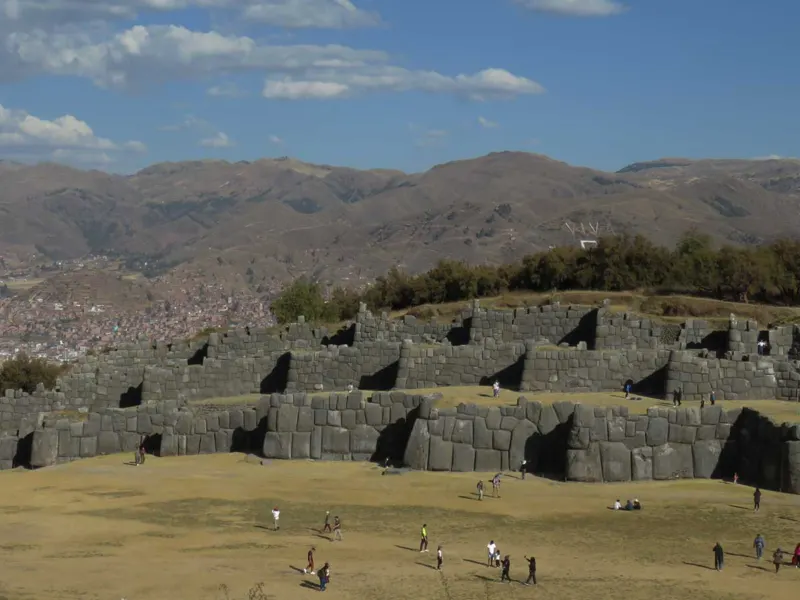
- Inti Raymi (24 June): the Inca Festival of the Sun, staged at Qoricancha, the Plaza de Armas and Sacsayhuamán. Seats in the Sacsayhuamán stands sell out.
- Virgen del Carmen in Paucartambo (around 15–18 July): masked dances about three to four hours from Cusco.
- Fiestas Patrias (28–29 July): national holidays, with high domestic demand for trains and tickets.
- Santurantikuy (24 December): a huge Christmas craft market in the Plaza de Armas.
Is it worth visiting Machu Picchu in the rainy season?
Yes, if you are flexible. Rain rarely lasts all day, the scenery is spectacular and the site is far calmer, but you should accept some cloud and pack properly.
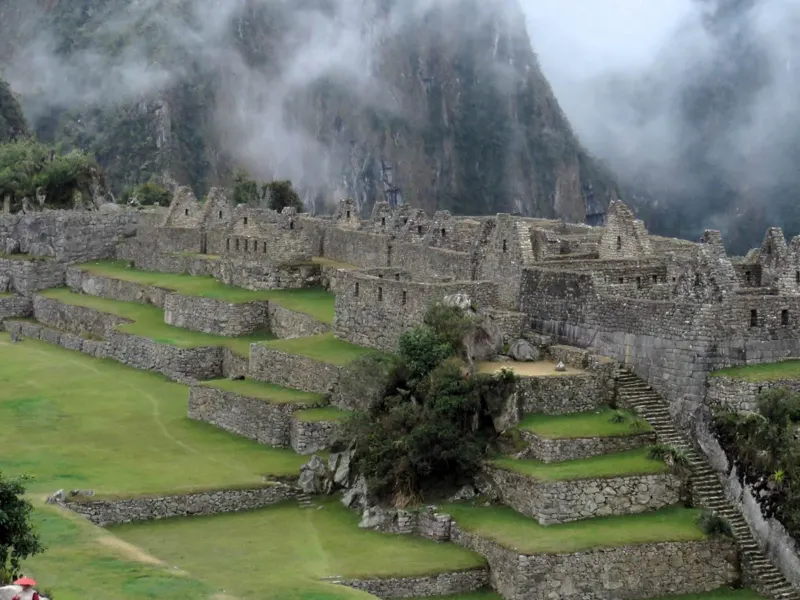
Many of our travellers in March and November tell us they loved the moody clouds lifting over the ruins. What makes the difference is preparation:
- Bring a light waterproof jacket or poncho (umbrellas are not allowed inside the citadel) and quick-dry clothes.
- Wear shoes with good grip: the stone steps get slippery.
- Use insect repellent in Aguas Calientes and at Machu Picchu, where sandflies are common.
- Leave a buffer day in your itinerary in case of train delays or road closures.
- Take the train rather than the hydroelectric route; compare all options in how to get from Cusco to Machu Picchu.
In the dry season, packing is about layers: sun protection (UV is strong at this altitude), a warm fleece and a hat for cold Cusco nights, and a light layer for Machu Picchu’s warmer afternoons.
Best time for the Inca Trail, Rainbow Mountain and Humantay Lake
For high-altitude hikes, the dry season (May–September) is clearly the best time. These routes climb well above Cusco, so clear weather and dry paths matter even more.
Inca Trail
The classic four-day Inca Trail reaches 4,215 m (13,828 ft) at Dead Woman’s Pass. It closes every February for maintenance, and permits for May to August are limited and often sell out months ahead. If you miss them, a train-based day trip such as our Machu Picchu Full Day tour (from USD 350 per person) is a reliable alternative.
Rainbow Mountain (Vinicunca) and Palccoyo
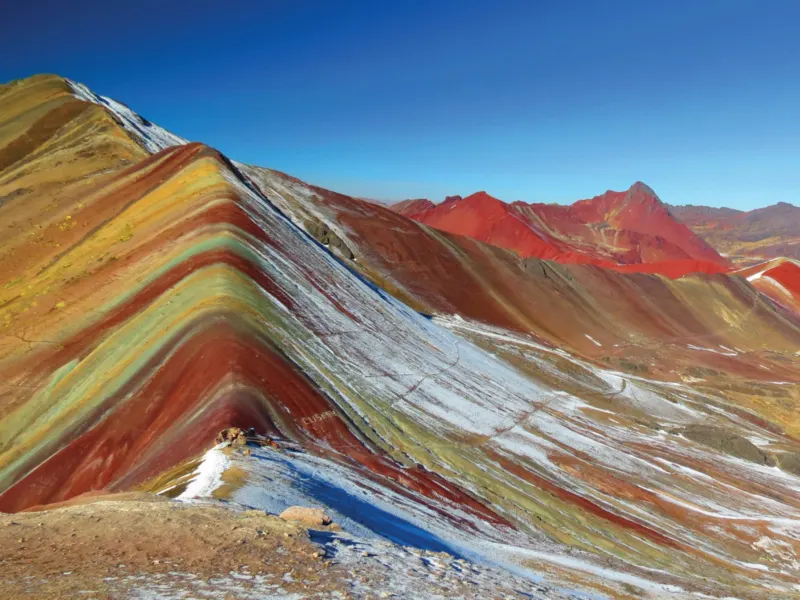
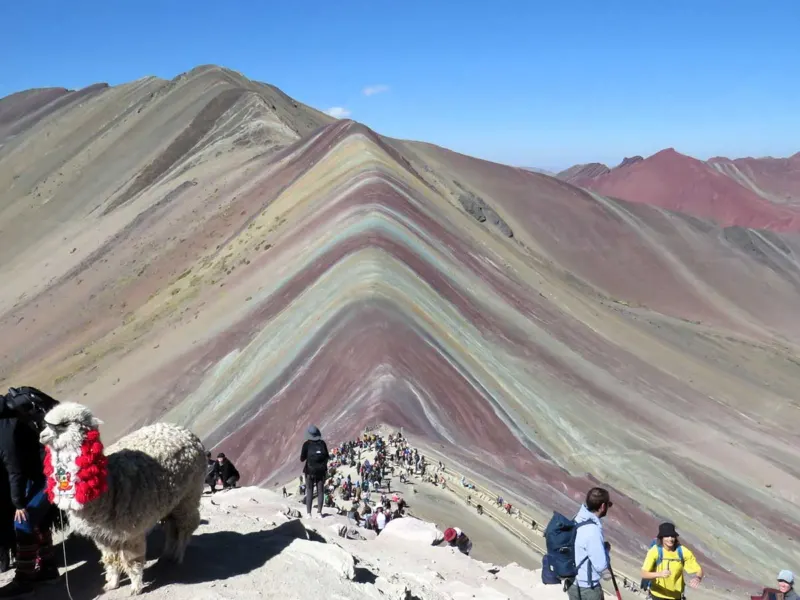
Vinicunca stands at about 5,036 m (16,522 ft). In the dry season the colours are sharpest; from December to March, snow or hail can cover the stripes. Our Rainbow Mountain tour (USD 145) runs all year, and Palccoyo is a gentler alternative with a shorter walk.
Humantay Lake
Humantay Lake lies at roughly 4,200 m (13,780 ft) below the Salkantay glacier. Its turquoise colour shines best on sunny dry-season mornings. Join our Humantay Lake Full Day (USD 140), ideally after two days of acclimatisation.
Whatever the month, spend at least one or two days in Cusco or the Sacred Valley before any big hike. Our guide to altitude sickness in Cusco explains how to prevent it.
How far ahead should you plan?
For June to August, plan three to six months ahead; for the shoulder and rainy months, four to eight weeks is usually enough. Inti Raymi dates and Inca Trail permits need the most lead time.
A smart way to fit Cusco, the Sacred Valley and Machu Picchu into one trip in any season is a multi-day package that includes acclimatisation. Our Sacred Valley & Machu Picchu 4D/3N (from USD 490) descends gradually from Cusco to the lower Sacred Valley, at about 2,870 m (9,420 ft), before Machu Picchu. For a full overview of tickets, trains and logistics, read our complete Machu Picchu travel guide.
Local tip from our team: in July and August, the 2–3 p.m. light over the citadel is beautiful and crowds thin out as morning groups head back to Aguas Calientes.
Not sure which month suits you? Tell us your dates and interests and our Cusco team will suggest the best timing and itinerary. Contact Peruvian Path for free, personalised advice.
Frequently asked questions
What is the best month to visit Machu Picchu?
May and September are often the best months to visit Machu Picchu. Both fall in the dry season, so rain is unlikely and views are usually clear, but crowds are lower than in the June to August peak. April and October are also good choices if you accept a few showers in exchange for greener landscapes and easier availability.
When is the rainy season in Cusco and Machu Picchu?
The rainy season runs roughly from November to March, with January and February the wettest months. Rain usually falls as intense afternoon showers rather than all-day downpours. Machu Picchu, at about 2,430 m, is more humid than Cusco and can get rain even in the dry season, so a light rain jacket is useful all year.
Is Machu Picchu open in February?
Yes. Machu Picchu is open every day of the year, including February. What closes in February is the classic Inca Trail, which the authorities shut each year for maintenance. You can still reach the citadel by train to Aguas Calientes and bus. February is the quietest month, but it is also one of the wettest, so plan a flexible itinerary.
When is Inti Raymi in Cusco?
Inti Raymi, the Inca Festival of the Sun, takes place every year on 24 June. The celebration starts at Qoricancha, continues in the Plaza de Armas and culminates at the Sacsayhuamán esplanade above Cusco. Hotels, trains and Machu Picchu tickets around that date are in high demand, so book several months in advance.
How far in advance should I book Machu Picchu tickets?
For visits between June and August, book Machu Picchu tickets three to six months ahead, especially if you want Huayna Picchu or Machu Picchu Mountain. For the rainy and shoulder months, four to eight weeks is usually enough. Daily capacity is limited by the Ministry of Culture of Peru, so secure your entry before buying trains.

Peruvianpath
Part of the Peruvian Path team in Cusco. We share first-hand knowledge from years guiding travelers across the Andes.