In this article
- What are the ways to get from Cusco to Machu Picchu?
- Which option is best? Comparison table
- How does the train from Cusco to Machu Picchu work?
- From Ollantaytambo or from Cusco?
- Which train class should I choose?
- How do I get from Aguas Calientes up to Machu Picchu?
- Can I hike the Inca Trail to Machu Picchu?
- What is the hydroelectric route and is it safe?
- Can I visit Machu Picchu in one day from Cusco?
- Practical tips from our guides in Cusco
Part of the guide: Machu Picchu Travel Guide: How to Visit from Cusco
Key takeaways
- All routes end in Aguas Calientes; from there a 25–30 minute bus (or 1.5 h walk) goes up to Machu Picchu.
- The train from Ollantaytambo (1.5–2 h) is the best option for most travelers; economy fares start around US$60–80 one way.
- The classic Inca Trail takes 4 days, needs a permit booked months ahead and closes every February.
- The hydroelectric route is the cheapest but takes 9–10 hours and requires at least 2 days.
- A one-day trip from Cusco is possible by train with an early start.
Quick facts
- Cusco altitude
- 3,399 m (11,152 ft)
- Ollantaytambo altitude
- 2,792 m (9,160 ft)
- Aguas Calientes altitude
- 2,040 m (6,693 ft)
- Machu Picchu altitude
- approx. 2,430 m (7,972 ft)
- Train Ollantaytambo–Aguas Calientes
- 1.5–2 h, approx. 43 km
- Bus Aguas Calientes–Machu Picchu
- 25–30 min, 8 km
- Classic Inca Trail
- 4 days, approx. 42 km, closed in February
- Hydroelectric walk
- approx. 11 km, 2.5–3 h
To get from Cusco to Machu Picchu you first reach Aguas Calientes, the town at the foot of the ruins, and then ride a 25-minute bus up to the citadel. Most travelers take the train from Ollantaytambo or Cusco (1.5–3.5 hours). The alternatives are hiking the Inca Trail (2 or 4 days) or the cheaper hydroelectric route (road plus a 2.5–3 hour walk).
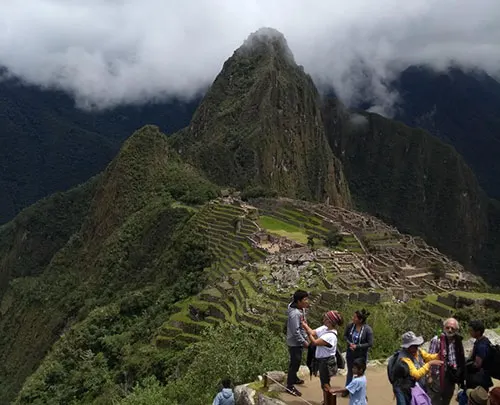
There is no road that connects Cusco directly with Machu Picchu. Every route ends in Aguas Calientes (also called Machu Picchu Pueblo, 2,040 m / 6,693 ft), and from there you climb to the archaeological site at about 2,430 m (7,972 ft). Below, our guides in Cusco explain each option, what it really costs in time and money, and which one we recommend for your trip. If you are still planning the whole visit, start with our complete Machu Picchu travel guide.
What are the ways to get from Cusco to Machu Picchu?
There are four realistic ways: the train (fastest and most comfortable), the Inca Trail (the classic trek), the hydroelectric route (the budget option) and organized tours that combine transport, tickets and guide. Each one fits a different budget, fitness level and number of days.
- Train: from Ollantaytambo (Sacred Valley) or from the Cusco area to Aguas Calientes, operated by PeruRail and Inca Rail.
- Inca Trail: the classic 4-day trek (about 42 km) or the Short Inca Trail in 2 days, arriving through the Sun Gate (Inti Punku).
- Hydroelectric route: 6–7 hours by road to Hidroeléctrica station, then about 11 km on foot along the railway.
- Organized tour: a full-day or multi-day package where the agency books trains, buses, entry tickets and a licensed guide.
Which option is best? Comparison table
For most visitors the train from Ollantaytambo is the best balance of time, comfort and price. Choose the Inca Trail if trekking is the highlight of your trip, and the hydroelectric route only if you have extra days and a tight budget.
| Route | Total time Cusco → Aguas Calientes | Approx. cost (one way) | Effort | Best for |
|---|---|---|---|---|
| Train from Ollantaytambo | 3–3.5 h (1.5–2 h road + 1.5–2 h train) | Train from about US$60–80 (economy class) | Low | Most travelers, day trips |
| Train from Cusco (Poroy/San Pedro) | 3.5–4 h | Usually a bit more than from Ollantaytambo | Low | Travelers staying in Cusco |
| Classic Inca Trail | 4 days / 3 nights | Packages often from about US$700+ | High | Hikers, bucket-list experience |
| Short Inca Trail | 2 days / 1 night | Mid-range package | Medium | Short on time but want to hike |
| Hydroelectric route | 9–10 h (road + 2.5–3 h walk) | Lowest; shared van plus walking | Medium | Backpackers with flexible dates |
Prices are approximate and change by season and class; always check the operators’ official websites before booking.
How does the train from Cusco to Machu Picchu work?
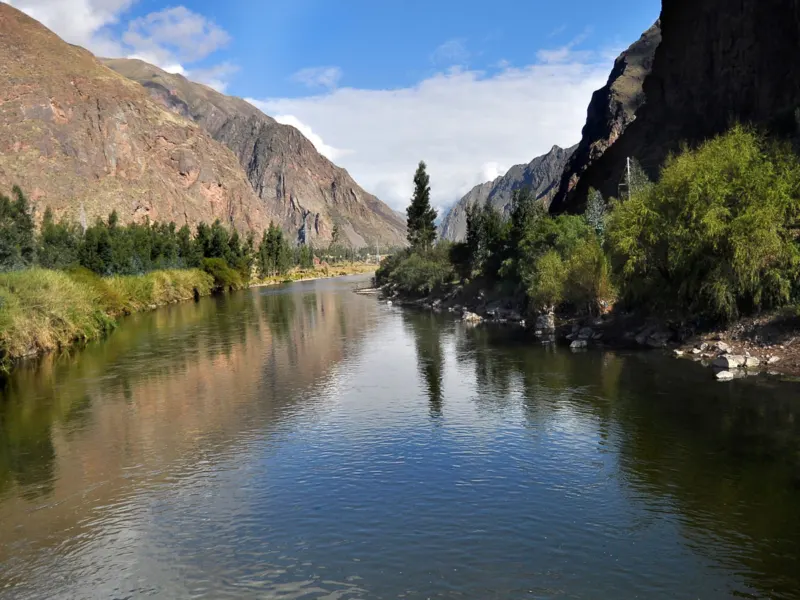
The train runs along the Urubamba River to Aguas Calientes, which is the only rail access to Machu Picchu. Two companies operate the line: PeruRail and Inca Rail, both with several service classes.
From Ollantaytambo or from Cusco?
Ollantaytambo (2,792 m / 9,160 ft) is the main departure point, with the most frequent schedules. The train ride takes about 1 hour 30 minutes to 1 hour 50 minutes and covers roughly 43 km. Getting from Cusco to Ollantaytambo takes 1.5–2 hours by road (about 72 km), by private transfer, tour van or shared colectivo.
Departures from the Cusco area leave from Poroy station (about 20 minutes from the historic center) or San Pedro station, depending on the season and operator, and take about 3.5 hours. In some months, especially during the rainy season, operators replace Cusco departures with a “bimodal” service: a bus to Ollantaytambo and the train from there.
Which train class should I choose?
- Economy/standard (PeruRail Expedition, Inca Rail Voyager): comfortable seats, large windows, snack available. From about US$60–80 one way.
- Panoramic (PeruRail Vistadome, Inca Rail 360°): glass roof panels, snack included and often a cultural show. Usually around US$90–150 one way.
- Luxury (Belmond Hiram Bingham, Inca Rail Private): gourmet meals and service, priced in the hundreds of dollars per person.
Our first-hand tip: the scenery is best on the left side of the train going to Machu Picchu, and the views from economy class are already spectacular. Carry your passport (it is checked at boarding) and respect the luggage limit of about 5 kg (11 lb) per passenger; leave large bags in your Cusco hotel.
How do I get from Aguas Calientes up to Machu Picchu?
From Aguas Calientes you take the shuttle bus up the 8 km Hiram Bingham road, a 25–30 minute ride, or you walk up the stone stairway in about 1 hour 15 minutes to 1 hour 45 minutes.
- Bus: run by Consettur. The fare for foreign adults has been approximately US$24 one way; buy the ticket in Aguas Calientes or in advance and check the current rate. The first buses leave around 5:30 am, and queues are long in high season.
- Walking: cross the Puente Ruinas bridge (open from about 5:00 am) and climb steep stone steps. It is free but demanding, and it is best done going down after your visit.
Remember that your Machu Picchu ticket has a fixed entry time and circuit, so plan the bus with at least 45 minutes of margin. Our guide to Machu Picchu tickets and circuits explains how to choose the right one.
Can I hike the Inca Trail to Machu Picchu?
Yes, but only with a licensed operator and a permit that must be booked months in advance. The classic Inca Trail takes 4 days and about 42 km from km 82 (Piscacucho), and it is the only route that arrives on foot through the Sun Gate.
- Permits: issued by the Ministry of Culture of Peru and SERNANP, limited to about 500 people per day including guides, cooks and porters. For May–August they often sell out 4–6 months ahead.
- Closure: the trail closes every February for maintenance and conservation.
- Difficulty: the highest point is Dead Woman’s Pass (Warmiwañusca) at 4,215 m (13,829 ft), so you should acclimatize in Cusco for at least 2 days. Read our guide on how to prevent altitude sickness in Cusco.
- Short Inca Trail: starts at km 104, covers about 12 km in one day passing Wiñay Wayna, and continues to Machu Picchu the next morning. It still requires a permit.
What is the hydroelectric route and is it safe?
The hydroelectric route is the cheapest overland way: about 6–7 hours by road from Cusco to Hidroeléctrica station, then a walk of roughly 11 km (2.5–3 hours) along the railway to Aguas Calientes. It is generally safe if you travel in daylight and with a reputable company.
- Leave Cusco early in the morning by shared tourist van.
- Cross the Abra Málaga pass at about 4,316 m (14,160 ft) and descend through Santa María and Santa Teresa.
- Arrive at Hidroeléctrica around midday and walk the flat trail beside the tracks (or take the short train, about 40 minutes, if seats are available).
- Sleep in Aguas Calientes and visit Machu Picchu the next morning.
Things to know: the mountain road is winding and unpaved in parts, landslides can close it in the rainy season (December–March), and you need at least 2 days. Bring a flashlight, water, rain gear and insect repellent; the sandflies near the river are relentless.
Can I visit Machu Picchu in one day from Cusco?
Yes. A full day from Cusco is possible by train, with a departure around 4:00–5:00 am and a return late at night. It is tiring but ideal if you are short on time.
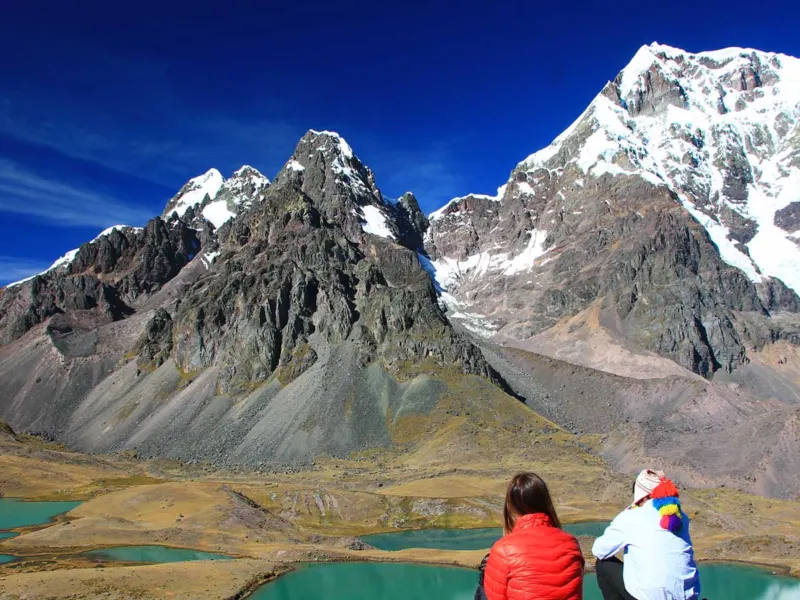
Our Machu Picchu Full Day tour (from US$350 per person) includes transfers, round-trip train, bus, entry ticket and a professional guide, so you don’t have to coordinate timetables. If you have more days, we recommend sleeping in the Sacred Valley first: it is lower than Cusco and makes acclimatization easier. Our Sacred Valley & Machu Picchu 4D/3N package (US$490) does exactly that, and the 5D/4N version with Rainbow Mountain (US$650) adds Vinicunca. You can also start with a Sacred Valley Full Day tour (US$150) that ends in Ollantaytambo, right next to the train station.
Practical tips from our guides in Cusco
Book trains and entry tickets together, as early as possible, and choose your route according to the season.
- Buy your Machu Picchu ticket first, then the train: the ticket sets your day and entry time.
- In high season (June–August) trains and buses sell out; book 1–2 months ahead. See the best time to visit Machu Picchu.
- Choose a return train at least 2.5–3 hours after your entry time ends, to avoid rushing.
- Check the official PeruRail and Inca Rail websites for timetables, and the Ministry of Culture site for tickets; avoid unofficial resellers.
- Carry soles in cash for Aguas Calientes, plus your original passport.
Not sure which route suits your dates and fitness? Our local team in Cusco can design it for you with trains, tickets and guide included. Contact us and we will reply with a tailored plan and real availability.
Frequently asked questions
How long does it take to get from Cusco to Machu Picchu?
By train it takes about 3.5 to 4 hours door to door: 1.5–2 hours by road to Ollantaytambo, 1.5–2 hours by train to Aguas Calientes, plus a 25–30 minute bus up to the citadel. The hydroelectric route takes 9–10 hours, and the classic Inca Trail takes 4 days on foot.
What is the cheapest way to get from Cusco to Machu Picchu?
The hydroelectric route is the cheapest. You travel about 6–7 hours by shared van to Hidroeléctrica station and then walk roughly 11 km (2.5–3 hours) along the railway to Aguas Calientes. It saves the train fare but needs at least two days and is affected by landslides in the rainy season.
Should I take the train from Cusco or from Ollantaytambo?
Ollantaytambo has the most departures and the shortest train ride, about 1.5–2 hours, so it is the most flexible option. Trains from the Cusco area (Poroy or San Pedro station) take about 3.5 hours and in some months, especially the rainy season, are replaced by a bimodal bus-and-train service.
Do I need a permit to hike the Inca Trail to Machu Picchu?
Yes. Permits are issued by Peru's Ministry of Culture and SERNANP, are limited to about 500 people per day including staff, and can only be booked through a licensed operator. For May to August they often sell out 4–6 months ahead, and the trail closes every February for maintenance.
How much is the bus from Aguas Calientes to Machu Picchu?
The Consettur bus has cost foreign adults approximately US$24 one way, with lower rates for Peruvians and children. The ride takes 25–30 minutes on the 8 km Hiram Bingham road. Prices can change, so check the current fare before you travel; walking up the stone stairs is free.

Peruvianpath
Part of the Peruvian Path team in Cusco. We share first-hand knowledge from years guiding travelers across the Andes.